In my previous blog, I talked about natsubate (summer fatigue) — that heavy, drained feeling so many of us get by the middle of summer. If you followed those tips through August, I hope your summer felt a little lighter.
But here's something that surprised me when I first learned it, even growing up in Japan: the fatigue doesn't always end when summer does. There's actually a name for what comes next, too.
We call it akibate (秋バテ) — a Japanese term often used to describe the lingering fatigue some people experience as summer ends and autumn begins. Literally translated, akibate means “autumn fatigue,” or more loosely, “post-summer exhaustion.”

What Is Autumn Fatigue, Exactly?
Autumn fatigue isn't a medical diagnosis, and it's not really "new" fatigue. Think of it less as a new problem and more as the lingering effects of what your body went through during the summer.
The heat, the air conditioning, the irregular sleep, heavier summer meals, irregular eating, and lots of ice-cold foods and drinks — your autonomic nervous system (the system that helps regulate things like body temperature, digestion, heart rate, and blood pressure) has been constantly adapting to changes in temperature, sleep, and daily routines.
When autumn arrives with its own new stress, larger swings between warm afternoons and cool mornings, that already-tired system can struggle to keep up. As a result, you may experience lingering low energy, a sluggish appetite, or digestion that just doesn't feel quite "on," even though summer is technically over.

Why the Gut Takes the Hit
This part is where the science and the more holistic Japanese view of the body actually line up quite nicely.
Physiologically, temperature swings ask your autonomic nervous system to constantly recalibrate — shifting blood flow, adjusting digestion, regulating heat. Stress and changes in the autonomic nervous system can influence gastrointestinal function, which may help explain why some people notice changes in digestion when they're under stress.
In traditional Japanese approaches to health, digestion has often been viewed as closely connected to overall well-being. Modern research into the gut-brain connection has started to explain some of the mechanisms behind that old intuition, though this is still an evolving area of science, and everyone's body responds a little differently.
Add in a few weeks of irregular summer eating, more takeout or heavy foods like barbecue, more cold foods, skipped meals, or less variety, and it's easy to see how your gut microbiome may respond to these changes in diet, routine, and season.

The Japanese Approach: Working With the Season, Not Against It
One thing I appreciate about how autumn is approached in Japan is that it isn't about "fixing" fatigue with one big intervention. It's about small, consistent adjustments:
-
Warming things back up gradually — easing off ice-cold drinks and dishes as the weather cools, rather than switching all at once
-
Leaning into seasonal ingredients like mushrooms, root vegetables, fruits such as persimmons, pears, and apples, and new-harvest rice can add variety, fiber, and nutrients to your meals.
-
Keeping fermented foods in the daily rotation — miso, pickles, and fermented drinks — as a steady, low-effort way to support the gut through the transition
-
Prioritizing sleep and routine, since irregular rhythms in early autumn can quietly extend the fatigue from summer
None of these are dramatic changes. They're just steady habits, repeated.
Where R's KOSO Fits In
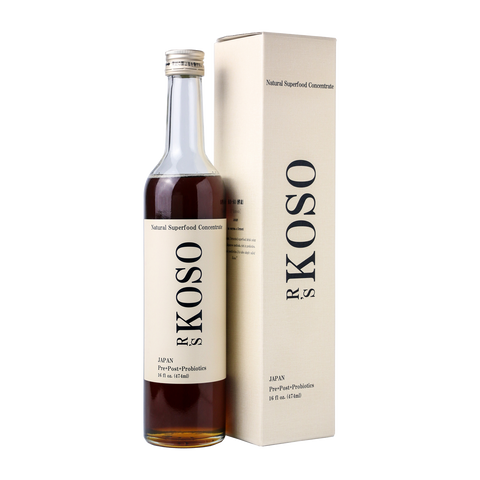
This is exactly the kind of season where I personally lean on R's KOSO a little more. It's made from over 100 fermented plant-based ingredients, so it offers prebiotics, probiotics, and postbiotics together, in one gentle daily habit — without asking a tired digestive system to do much extra work. I don't think of it as a fix for akibate, more like one steady support alongside sleep, seasonal food, and rest, as your body adjusts to the new season.