You’re trying to lose body fat. You’re eating well. You’re staying consistent. And yet, you feel hungry all the time.
If that sounds familiar, it may not be just about willpower or discipline. Your sleep quality could be playing a bigger role than you think.

Sleep and Appetite: What the Science Actually Shows
Sleep is not just about feeling rested. It directly affects how your body regulates hunger. Research has consistently shown that sleep deprivation disrupts key hormones involved in appetite:
Ghrelin (the “hunger hormone”) increases
Leptin (the “satiety hormone”) decreases
This hormonal shift makes you feel hungrier and less satisfied after eating.
In controlled studies, people who are sleep-deprived not only report increased hunger but also show a stronger preference for high-calorie, high-sugar foods. In other words, poor sleep doesn’t just make you eat more—it can also change what you crave.
The Gut–Sleep Connection
Although good quality sleep is not a standalone solution, a healthy gut may support the systems involved in sleep. In fact, sleep and gut health are closely linked through what is known as the gut–brain axis.
The gut plays an important role in producing neurotransmitters:
-
A large portion of serotonin is produced in the gut
-
Serotonin is a precursor to melatonin, the hormone that regulates sleep
Emerging research suggests that disruptions in sleep may negatively affect the gut microbiome and that gut imbalances may, in turn, influence sleep quality.

R’s KOSO for Sleep
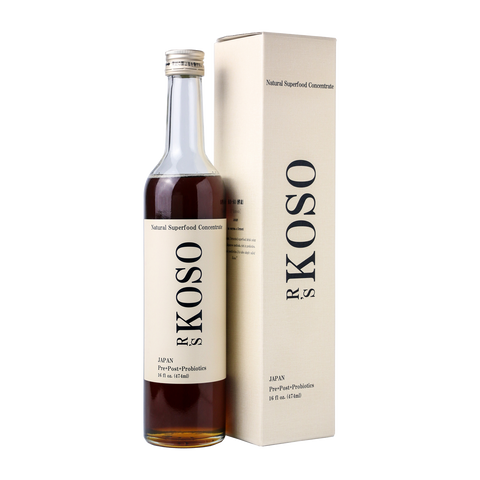
R’s KOSO is a Japanese traditional fermented beverage made from over 100 kinds of plant-based ingredients, including Japanese herbs, seaweeds, and mushrooms.
Fermented foods have been studied for their potential to:
-
Support gut microbiome diversity
-
Aid digestion
-
Contribute to overall metabolic health
 2. Be Mindful of Evening Meals