Every January 7th in Japan, people eat Nanakusa Gayu—rice porridge with seven spring herbs—to wish for health in the coming year.
At first glance, it may seem like a beautiful cultural ritual rooted in history. But from a nutritional and physiological perspective, this tradition is also remarkably well-designed for what our bodies actually need after the excess of the holidays.
As a nutritionist, I see Nanakusa Gayu not only as tradition, but as a digestive reset—something modern, overworked guts could truly benefit from.

Why January 7th? History Meets Physiology
Nanakusa Gayu originated from a blend of:
-
Ancient Japanese customs of gathering young spring greens (wakana-tsumi)
-
Chinese traditions of eating seven herbs on January 7th (Jinjitsu) to ward off illness
Over time, these practices merged into one of Japan’s Five Seasonal Festivals (Gosekku).
And here’s the interesting part:
January 7th also comes right after a period of heavy eating, alcohol intake, salty foods, and disrupted routines—exactly when digestion, the liver, and the gut microbiome are under the most stress.
Nanakusa-gayu also makes sense as a way to help the body get enough leafy greens during a season when fresh produce can be harder to access.
Traditional wisdom aligned beautifully with modern physiology.
Why Rice Porridge Makes Sense
From a nutritional standpoint, rice porridge is:
-
Easy to digest
-
Gentle on the stomach and intestines
-
Hydrating and warming
-
Nourish beneficial bacteria in the gut
Studies on gastrointestinal recovery show that simple, low-residue, warm foods reduce digestive workload and support gut barrier recovery after periods of overconsumption.
In short, Nanakusa Gayu gives your digestive system a break without any restriction.

The Seven Herbs: Traditional “Japanese Herbs” with Functional Benefits
The seven spring herbs are sometimes called Japanese wild herbs, and many contain bioactive compounds known to support digestion, circulation, and immune balance.
1. Seri (Japanese parsley)
-
Rich in vitamin C and minerals
-
Traditionally used to support digestion and circulation
-
Contains aromatic compounds that may stimulate appetite gently
2. Nazuna (Shepherd’s purse)
-
Source of fiber, calcium, iron, and zinc
-
Traditionally associated with detoxification and fluid balance
3. Gogyo (Cudweed)
-
Historically used for coughs and throat irritation
-
Contains flavonoids with mild anti-inflammatory properties
4. Hakobera (Chickweed)
-
Surprisingly high in plant protein and minerals
-
Traditionally used to soothe the stomach and support oral health
5. Hotokenoza (Japanese false hawkbit)
-
Known in folk medicine for supporting digestion
-
Important note: this is not the same plant as the modern “hotokenoza” herb
6. Suzuna (Turnip)
-
Contains digestive enzymes and fiber
-
Supports gentle detoxification and gut motility
7. Suzushiro (Daikon radish)
-
Rich in amylase enzymes that aid carbohydrate digestion
-
Traditionally used to support the stomach after heavy meals
Together, these herbs provide light fiber, micronutrients, and plant compounds without overwhelming digestion.

Why This Still Matters for Modern Life
You don’t need to eat traditional Nanakusa Gayu perfectly for it to work.
From a nutritional perspective, the core principles are simple: choosing warm, whole foods that are easy to digest and provide gentle nourishment. This approach helps reduce digestive stress, supports gut recovery, and allows the body to focus on restoring balance rather than working hard to process heavy or overly stimulating meals.
That’s why even any vegetable rice porridges, steamed vegetables, or warm broths with seasonal greens can offer similar benefits.

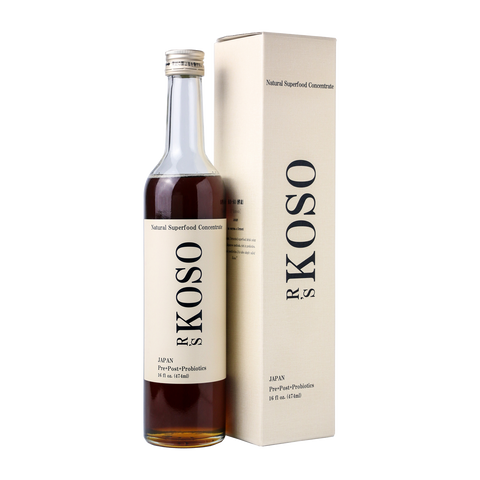
R’s KOSO + Porridge: A Gentle Reset for Your Gut
This is where R’s KOSO fits naturally.
R’s KOSO products are designed to:
-
Support digestion gently
-
Reduce unnecessary stress on the gut
-
Encourage balance, not extremes
Pairing R’s KOSO with:
-
Rice porridge
-
Warm soups
-
Easily digestible meals
creates a digestive “pause button” especially helpful after periods of indulgence, stress, or travel.
Think of it as: not detoxing, not restricting—just giving your gut space to recover.

No Seven Herbs? No Problem.
If spring herbs aren’t available where you live:
-
Add spinach, napa cabbage, turnip, daikon, or carrots
-
Make a warm soup instead of porridge
-
Focus on warmth, softness, and simplicity
The spirit matters more than perfection.
A Gentle Start to the Year
Nanakusa Gayu reminds us that health doesn’t come from doing more—but sometimes from doing less.
Less heaviness, stimulation, and pressure.
And more warmth, simplicity, and care.
This January, whether through traditional porridge, a simple soup, or R’s KOSO alongside gentle meals let’s give our digestion the rest it deserves.
Let’s get started!