
We don't really mark the halfway point of the year in America. January 1 comes with resolutions, planners, and an entire industry devoted to fresh starts. But June 30 passes with little notice.
In Japan, however, the end of June has served as a formal moment of reflection and renewal for more than 1,300 years. It's not simply a reminder to revisit goals. It is marked by rituals, seasonal foods, and shrine ceremonies designed to help people pause, reset, and begin again.
The idea is surprisingly practical. By the middle of the year, habits have shifted, intentions have faded, and daily routines have often drifted from where they began. Waiting until December to reflect means spending months operating on autopilot.
Japan has preserved a remarkably thoughtful framework for a mid-year reset.

Why Mid-Year Resets Actually Work
Behavioral scientists call dates like June 30 "temporal landmarks" — moments in time that help our brains separate one chapter from the next. Research shows we're significantly more likely to follow through on new habits when we attach them to one of these milestones.
In other words, starting fresh on a random Tuesday in late August doesn't feel particularly meaningful. Starting fresh at the halfway point of the year does. Our brains recognize it as a natural transition.
There's also a physical side to it. By June, most of us have accumulated six months of travel, celebrations, deadlines, disrupted routines, and less-than-perfect eating habits. A deliberate reset can benefit the body as much as the mind. Even relatively short periods of lighter eating have been shown to influence gut microbial diversity and markers of inflammation.
The mid-year reset isn't simply a cultural tradition. It's a moment where behavioral science and physiology happen to point in the same direction.
What Japanese People Actually Do
Japan didn't just acknowledge the halfway point of the year. It built traditions around it.
Nagoshi-no-Harae (June 30)
A purification ritual dating back more than a thousand years. People visit shrines and walk through a large woven grass ring called a chinowa, symbolically releasing the burdens — both physical and emotional — accumulated during the first half of the year.
Think of it as a ritualized way of setting down everything you've been carrying since January and stepping into the second half of the year a little lighter.

Minazuki (水無月)
A traditional triangular sweet eaten on June 30 to ward off summer fatigue and negative energy. Its shape represents shaved ice, once considered a luxury before refrigeration, while the red beans on top are believed to protect against misfortune. You could call it Japan's official mid-year treat.
Koromogae
The seasonal switch from winter clothing to summer clothing. The timing varies slightly by region — Hokkaido changes later than Okinawa — but the cultural rhythm remains the same. Schools, offices, and many households make the transition together. On the surface it's a wardrobe change, but symbolically it marks the beginning of a new season and a new mindset.
Ume-shigoto
While fewer households practice it today, June was traditionally the time when families preserved green plums to make umeboshi, plum syrup, or plum liqueur (umeshu). Interestingly, modern nutrition science offers some support for the tradition: umeboshi contains citric acid and naturally occurring antimicrobial compounds that may help support digestion during Japan's hot, humid summer months.
It's worth noting that June in Japan is genuinely humid, which helps explain why so many of these customs focus on lightening, cleansing, and preparing for the season ahead. Different climates may call for different approaches, but the idea of a mid-year reset travels surprisingly well.

Three Ideas to Borrow for Your Own June 30
1. Reset one habit that's drifted
Think back to January. What's one habit you intended to maintain but gradually let go of? Don't try to overhaul everything at once. Choose one. Research consistently shows that smaller, focused changes are more sustainable.
2. Give your body a chance to reset
That might mean a day of lighter eating, extra sleep, less alcohol, more hydration, or simply creating a little space for recovery. Small adjustments can have a surprisingly noticeable effect by mid-summer.
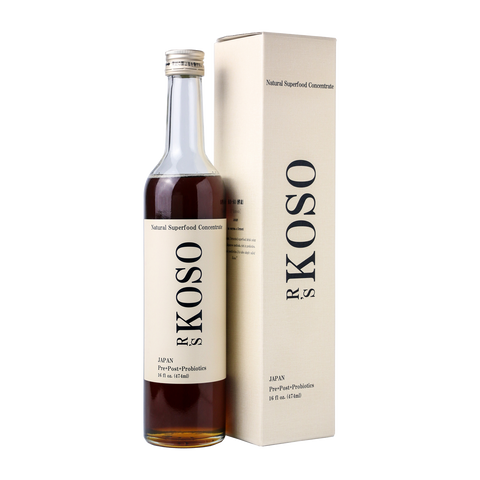
One simple way to create your own mid-year reset is to start the day with R's KOSO. Just as many traditional Japanese customs focus on lightening and preparing the body for the season ahead, a daily gut-supporting ritual can be a practical way to begin the second half of the year with renewed intention.
3. Spend five minutes writing things down
What worked during the first half of 2026? What didn't? And what's one thing you'd like to be true by December? Studies on goal-setting repeatedly show that written intentions are far more likely to become reality than intentions left floating around in our heads.
What Happened When I Tried It Myself
As I was writing this article, I decided to do a small version of the exercise myself.
Lately, I'd been carrying around the feeling that I hadn't accomplished nearly as much as I wanted to this year. But when I sat down and actually wrote out what I'd done in the first six months — along with what had been weighing on my mind — something surprising happened.
I realized I'd achieved far more than I'd been giving myself credit for. And many of the things that felt so heavy in my head looked much smaller once they were on paper.
By the time I finished, I wasn't dwelling on what hadn't happened yet. I was feeling energized for the second half of the year.
If you take only one thing from this article, let it be this: give yourself a moment to pause before rushing into July. Write down what you've learned, what you've accomplished, and what you want the rest of the year to look like.
And if you'd like to make that reset feel a little more tangible, consider creating a simple morning ritual. For me, that often means starting the day with R's KOSO — a small daily practice that supports digestion, gut health, and a more intentional beginning to the day.
The next 6 months start today. Join us in making R's KOSO part of your daily routine.
Sometimes a fresh start doesn't require a dramatic change. Sometimes it begins with a few quiet minutes, a blank page, and a simple habit repeated each morning.

Six Months Down, Six to Go
The halfway point of the year matters more than we often realize. Our habits drift, our routines change, and our intentions quietly evolve. Japanese culture has recognized this for more than a thousand years.
So this June, consider taking a moment to reset.
Choose one habit to recommit to. Give your body a little extra care. Write down what you've learned from the first half of the year and what you want from the second.
In your own way, create a modern version of walking through that woven grass ring — a small ritual that marks the transition from one chapter to the next.
The next six months may feel very different from the first.
Let’s get started!
Written by Eriko Shintani
Certified holistic nutritionist/Holistic nutrition advisor
Instagram: @vegefuldays
References
Dai, H., Milkman, K. L., & Riis, J. (2014). The fresh start effect: Temporal landmarks motivate aspirational behavior. Management Science, 60(10), 2563–2582. https://doi.org/10.1287/mnsc.2014.1901
Patterson, R. E., & Sears, D. D. (2017). Metabolic effects of intermittent fasting. Annual Review of Nutrition, 37, 371–393. https://doi.org/10.1146/annurev-nutr-071816-064634