When I first moved to North America, I gained about 15 kilograms (33 pounds).
What surprised me most wasn’t just the weight gain itself — it was how easily it happened. I wasn’t suddenly eating wildly or ignoring my health.
What changed was my environment.
Living outside Japan made me realize something important. Japanese people are not “naturally thin” because of genetics or willpower (well, some are).
They simply grow up surrounded by habits and systems that make overeating harder — without constant restriction.
Here are some of the biggest differences I noticed, and why they matter.

1. Portion Sizes Are Simply Smaller
One of the first things I noticed in North America was how much larger everything was.
Restaurant meals.
Drink cups.
Desserts.
Even the plates and glasses we use at home.
In Japan, portions are designed to look complete and satisfying — without being excessive.
In North America, “value” often means more: more food, more sugar, more calories.
Research shows that larger plates and portions encourage us to eat more without realizing it. In Japan, smaller servings support a natural version of hara hachi bu — eating until you’re about 80% full.
You don’t need discipline when the portion already matches your body’s needs.

2. We Choose Amounts We Can Finish
In Japan, there’s a cultural idea that it’s better to choose an amount you can finish, rather than taking more than you need.
This doesn’t mean “clean your plate at all costs.” It means choosing wisely from the beginning.
Another reason for this mindset is food safety. In Japan, many restaurants don’t allow leftovers to be taken home due to strict food safety standards. Because of that, people naturally learn to order portions they can comfortably finish.
A good example is coffee shops. In Japan, the most common Starbucks size is a Tall. Many people still order Short, especially for sweet drinks. In the U.S., a “Small” is often the least popular option — or barely exists.
Japanese people aren’t trying to restrict themselves. They’re used to asking, “How much do I actually need?”
That awareness alone makes a huge difference over time.

3. Snacks and Meals Are Clearly Separate
This was one of my biggest culture shocks.
When I studied in California, my host family packed cookies and chips in my lunch almost every day. I remember being surprised — not because snacks are bad, but because in Japan, those are not considered part of a meal.
I was also shocked to see people ordering nachos as lunch. No protein and barely any fibre. Just deep-fried chips and a lot of cheese. This belongs to a snack in Japan.
In Japan, snacks are snacks.
Meals are meals.
Sweets, cookies, chips, and pastries are enjoyed intentionally — usually between meals, not as meal replacements. This separation helps regulate hunger, digestion, and blood sugar more naturally.
When snacks become meals, it’s easy to overconsume calories without feeling truly nourished.

4. Hydration Is Mostly Water or Tea
In Japan, daily hydration usually comes from water, tea, or warm drinks like barley tea or green tea.
Sweet beverages are treated more like desserts — something to enjoy occasionally, not something to sip all day.
This dramatically reduces “liquid calories,” which don’t create fullness but can heavily impact blood sugar and weight.
This habit alone explains a lot.
It’s Not About Restriction — It’s About Structure
What I learned after gaining weight in North America is this.
Japanese people don’t stay lean because they’re stricter.
They stay lean because their daily habits and culture are quietly supportive.
Smaller portions.
Clear boundaries around food.
Gentle hydration.
Awareness without obsession.
These habits protect digestion, appetite regulation, and blood sugar — all deeply connected to gut health.

Where R’s KOSO Fits In
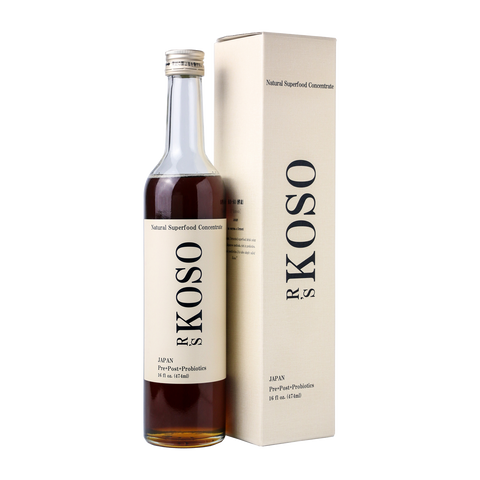
R’s KOSO was created from this same philosophy.
In Japan, fermented foods are consumed daily to support digestion and the gut microbiome. R’s KOSO is a modern way to continue that tradition — offering prebiotics, probiotics, and postbiotics from long-term plant fermentation.
Rather than focusing on restriction, R’s KOSO supports:
-
better digestion
-
steadier energy
-
healthier hunger cues
When your gut is supported, balanced eating becomes more natural — not forced.
A Gentle Takeaway
If you’ve struggled with weight management, energy, or digestion, it’s not a personal failure. Often, it’s just the environment you’re living in.
Instead of trying to “eat less” or “be stricter,” consider adopting one Japanese-inspired habit at a time — smaller portions, clearer meals, gentler hydration, or daily gut support.
Health doesn’t come from doing everything perfectly. It comes from building habits that work with your body.
And that’s something we can all learn — no matter where we live.
Let’s get started!